Article · Malawi
Lilongwe Legislative Gridlock Proves the 2025 Electoral Mandate Is a Structural Fiction
The DPP’s parliamentary plurality masks a deeper institutional paralysis that renders the current government incapable of meaningful reform.
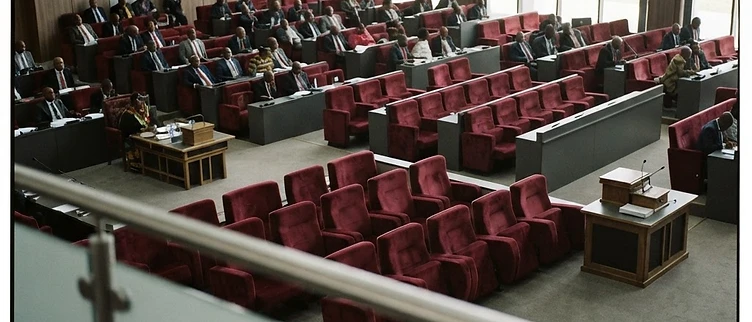
Illustration. AI-generated editorial image, not a documentary photograph.
The 2025 election results in Malawi have created a legislative environment defined by fragmentation rather than governance. By analyzing the 73 independent seats in the National Assembly, it becomes clear that the DPP's victory is a hollow mandate that will inevitably collapse under the weight of institutional gridlock.
The Illusion of a Governing Mandate
The conventional narrative surrounding the 2025 Malawian general election suggests that the Democratic Progressive Party (DPP) secured a decisive return to power. With 78 seats in the National Assembly, the DPP appears to hold the reins of the state. However, this reading is fundamentally flawed. In the context of Lilongwe’s current political settlement, the DPP’s plurality is not a mandate for governance; it is a structural trap. The presence of 73 independent members of parliament—nearly equal to the ruling party’s strength—has effectively neutered the executive’s ability to pass substantive legislation, turning the National Assembly into a theater of transactional politics rather than a chamber of policy reform.
The Independent Variable as a Destabilizing Force
The rise of the independent candidate in the 2025 cycle was not a triumph of grassroots democracy, as some civil society observers have claimed. Instead, it represents the atomization of the Malawian political landscape. In Lilongwe, where the proximity to the seat of power intensifies every legislative maneuver, these 73 independents act as a floating, unpredictable bloc. They are not bound by party discipline, nor are they beholden to a national platform. For the DPP, this means that every budget vote, every anti-corruption bill, and every administrative appointment requires a costly, ad-hoc coalition-building exercise that drains the executive of its political capital. The government is not leading; it is merely surviving from one parliamentary session to the next.
The Failure of the Anti-Corruption Rhetoric
Recent public spats between the legislature and the executive, particularly regarding the oversight of public resources, highlight the hollowness of the current administration’s reformist promises. When the Speaker of the National Assembly—a member of the DPP’s own governing council—publicly challenges the executive on corruption, it is not a sign of a healthy separation of powers. It is a symptom of a system where the ruling party cannot even control its own legislative leadership. The government’s demand that critics provide evidence to prosecutorial agencies is a classic deflection tactic, masking the reality that the DPP lacks the legislative cohesion to dismantle the very systems of patronage that keep its own coalition afloat.
Why the 'Coalition Stability' Argument Fails
Critics of this analysis often point to the relative calm following the September 2025 elections as evidence of a stable political settlement. They argue that the signing of the Lilongwe City Peace Declaration and the orderly conduct of the polls suggest a maturing democracy. This view fails to distinguish between the absence of violence and the presence of governance. Peace in Lilongwe is currently a negative peace—a temporary truce between exhausted political factions. It does not translate into the capacity to address the structural poverty or the economic stagnation that the Speaker himself has identified as the country’s primary threat. A government that spends its energy managing a fragmented parliament is a government that has abandoned the business of the state.
Leveraging Intelligence for Strategic Survival
For political actors operating in this volatile environment, the traditional playbook of party-line mobilization is obsolete. Success in the current Lilongwe landscape requires a shift toward granular, data-driven engagement. This is where Apex Africa’s Political Intelligence services become indispensable. We help leaders move beyond the rhetoric of national campaigns to map the specific interests of the independent bloc and the shifting loyalties within the parliamentary committees. Understanding the 'political settlement' is not just about knowing who holds the seats; it is about identifying the transactional nodes where power is actually exercised. Without this level of precision, political organizations are merely reacting to the chaos of the floor rather than shaping the legislative agenda.
The Path Forward
The 2025 election did not resolve Malawi’s political crisis; it merely relocated it to the floor of the National Assembly. As the DPP struggles to maintain its grip, the opposition remains fragmented, and the independent bloc continues to hold the balance of power, the risk of a total institutional collapse grows. Leaders who wish to navigate this period of uncertainty must abandon the fantasy of a unified mandate and embrace the reality of a fractured, transactional political order. The era of easy majorities is over. The era of strategic, intelligence-led navigation has begun. To secure your position in this shifting landscape, request a confidential consultation at https://apexafricastrategy.com.