Article · Mali
Kidal: The Strategic Mirage That Is Dismantling the Malian Junta
Why the obsession with northern territorial control is a fatal distraction from the regime's inevitable collapse in the south
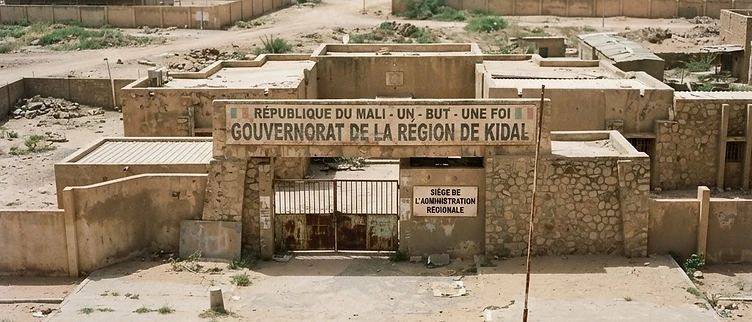
Illustration. AI-generated editorial image, not a documentary photograph.
The Malian junta's fixation on reclaiming Kidal as a symbol of national sovereignty is a strategic delusion that masks their crumbling authority in the south. By prioritizing symbolic northern victories over the reality of a collapsing security architecture, the regime is accelerating its own obsolescence.
The Kidal Fallacy
The conventional wisdom among Bamako’s military elite and their international apologists is that Kidal is the ultimate barometer of Malian statehood. If the flag flies over the northern stronghold, the state is sovereign; if it falls to the Forces for the Liberation of Azawad (FLA), the state is failing. This binary framing is not just simplistic—it is a dangerous strategic trap. The junta’s obsession with Kidal, evidenced by their desperate reliance on Russia’s Africa Corps to reclaim the city, is a classic case of misallocated political capital. While the regime celebrates the 'consolidation' of northern positions, they are losing the war for the soul of the country in the central and southern regions where the actual levers of power reside.
The Geography of Power vs. The Geography of Rhetoric
Political power in Mali is not determined by the ability to hold a desert outpost in the northeast; it is determined by the ability to secure the supply chains and administrative stability of the south. The recent coordinated attacks on Kati—the very heart of the junta’s military garrison—and the capital’s airport demonstrate that the insurgency has moved beyond the periphery. By focusing on Kidal, the junta is fighting a 20th-century war of territorial occupation while their opponents are waging a 21st-century war of systemic disruption. The blockade of fuel routes to Bamako by JNIM is a far more potent threat to the regime’s survival than any separatist flag-raising in the north. The junta is effectively guarding the front door while the house is being dismantled from the basement.
The Russian Betrayal and the Myth of Security
The narrative that Russian military support provides a 'security guarantee' for the junta has been shattered by the reality of the Africa Corps’ tactical withdrawals. When the junta accuses their Russian partners of 'betrayal' following the loss of Kidal, they are admitting to a fundamental failure of Political Intelligence. Relying on external mercenaries who prioritize their own survival over the regime’s political objectives is not a strategy; it is a dependency that leaves the state vulnerable to the whims of foreign contractors. The junta’s inability to anticipate the withdrawal of their primary security guarantor in Kidal proves that they lack the internal analytical capacity to manage their own geopolitical alliances. At Apex Africa, we emphasize that true security is built on domestic intelligence and local legitimacy, not on the shifting loyalties of foreign paramilitaries.
Rebutting the 'Sovereignty' Defense
Critics of this analysis will argue that the junta must hold Kidal to maintain the appearance of a unified nation-state, claiming that any concession to northern separatists would trigger a total collapse of the military’s domestic support. This argument fails because it confuses 'sovereignty' with 'control.' The junta’s current path is not preserving the state; it is exhausting the state’s resources on a symbolic project that yields no tangible political dividends. By prioritizing the optics of territorial integrity over the reality of economic and social stability, the regime is alienating the very population they claim to protect. A government that cannot secure its capital’s fuel supply is not sovereign, regardless of how many troops it stations in the desert. The 'sovereignty' defense is merely a mask for the regime’s inability to pivot toward a sustainable political settlement.
The Necessity of Strategic Realignment
For any political actor in Mali, the path forward requires a radical departure from the current obsession with northern geography. The regime—or any successor movement—must prioritize the restoration of administrative functionality in the south and the neutralization of the insurgency’s economic stranglehold. This requires a sophisticated approach to Political Research & Analytics that moves beyond military posturing. Leaders must understand the complex interplay between ethnic networks, economic supply chains, and the shifting loyalties of regional power brokers. The junta’s failure to conduct this level of analysis is why they are currently trapped in a cycle of reactive, failing military campaigns. They are playing a game of checkers while their opponents are playing a game of structural collapse.
Navigating the Reckoning
As the security situation continues to fragment, the window for a controlled transition or a strategic pivot is closing. The junta’s reliance on the suspension of political parties and the suppression of civil society has only served to create a vacuum of legitimate political discourse, leaving the field open for more radical actors. Navigating this environment requires more than just military force; it requires a deep, data-driven understanding of the shifting political landscape. Apex Africa Strategy & Intelligence provides the rigorous, evidence-based analysis necessary to identify these structural vulnerabilities before they become existential crises. We help leaders move beyond the rhetoric of the day to understand the underlying forces that will determine the next chapter of Malian politics.
If you are a political leader or organization operating in this volatile environment, you cannot afford to rely on the same failed strategies that have brought the state to this breaking point. Request a confidential consultation at https://apexafricastrategy.com to ensure your organization is prepared for the inevitable shifts in the regional power structure.