Article · Burundi
Why Is the Rumonge Security Vacuum the True Litmus Test for Burundi’s Fragile Stability?
The port city’s descent into lawlessness exposes the hollowness of the state’s administrative reforms.
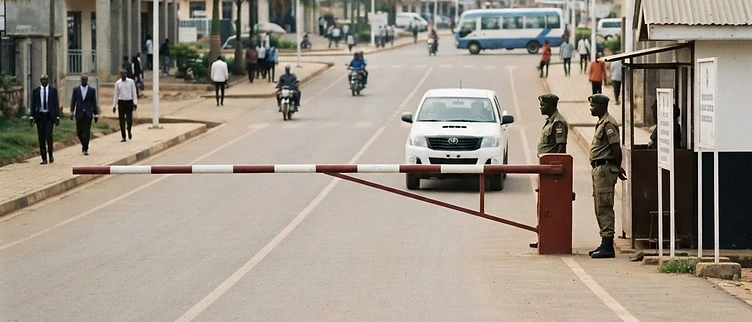
Illustrative image. AI-generated; it does not depict the event described.
The recent transfer of soldiers and reports of armed infiltration in Rumonge Province reveal that Burundi’s administrative consolidation is a facade. While the central government projects order, the reality on the ground is a security vacuum where state authority is being eroded by internal dissent and militia impunity. This article argues that Rumonge is not merely a peripheral province, but the critical failure point that threatens the entire national political architecture.
The Illusion of Administrative Order
The prevailing narrative in Bujumbura suggests that the 2025 administrative reforms, which reduced Burundi’s provinces from 18 to five, have successfully streamlined governance and solidified state control. Proponents of this technocratic shift argue that fewer provinces mean more efficient resource allocation and tighter oversight of local administration. However, the situation in Rumonge Province—a critical port hub in southwestern Burundi—shatters this illusion of stability. Far from being a success story of consolidation, Rumonge has become a microcosm of the state’s inability to project power beyond the capital.
Recent developments in Rumonge, specifically the October 2026 security alerts, demonstrate that the administrative map has changed, but the underlying power dynamics remain fractured. The government’s attempt to impose a top-down structure has only served to highlight the disconnect between the central authorities and the grassroots. When the state attempts to force efficiency onto a region defined by historical trauma and economic volatility, it does not create order; it creates a vacuum. This vacuum is currently being filled by a dangerous mix of military dissent and unchecked militia activity.
At Apex Africa Strategy & Intelligence, we view this not as a failure of policy, but as a failure of political intelligence. The government’s reliance on administrative reshuffling to solve deep-seated security issues is a classic case of mistaking the map for the territory. By ignoring the specific socio-political grievances of the Rumonge population, the ruling coalition has inadvertently created a fertile ground for instability. The state’s inability to maintain a monopoly on violence in this province is the most significant indicator of its broader structural fragility.
The Rumonge Security Vacuum
On October 22, 2026, the transfer of 21 soldiers from Murembwe Central Prison to an unknown destination signaled a deepening crisis within the security apparatus. These soldiers were reportedly detained after refusing to deploy to the front lines in the Democratic Republic of the Congo. This is not an isolated incident of insubordination; it is a symptom of a military that is increasingly disillusioned with the government’s regional security commitments. When the state’s primary instrument of control begins to fracture, the entire political edifice is at risk.
The situation is further complicated by the persistent reports of armed infiltration in the region. As of October 25, 2026, local authorities in Rumonge have been forced to acknowledge the threat of armed men entering from neighboring provinces. While the government dismisses these reports as attempts to portray the state as failing, the reality is that the population is living in a state of constant insecurity. The presence of these armed elements, whether real or perceived, creates a climate of fear that the state is unable to mitigate.
This security vacuum is exacerbated by the impunity of the Imbonerakure, the ruling party’s youth wing. In Rumonge and surrounding areas, these actors operate with a level of autonomy that undermines the official police and judicial structures. When the state’s formal institutions are bypassed by party-linked militias, the rule of law becomes a secondary concern. This dual-power structure is the hallmark of a regime that has prioritized political survival over institutional integrity.
The Myth of the 2025 Reform Success
The 2025 administrative consolidation was sold to the public as a means to end the fragmentation of local governance. By reducing the number of communes and provinces, the government claimed it would eliminate the inefficiencies that had plagued the country for decades. Yet, in Rumonge, the result has been the opposite. The centralization of power has stripped local leaders of their ability to respond to immediate community needs, leaving them as mere conduits for directives from the center.
This centralization has also had a devastating impact on the delivery of basic services. In Rumonge, schools are struggling with severe overcrowding, with reports of five pupils sharing a single bench. The government’s promise of “Zero Improperly Seated Children” has proven to be an empty slogan, further alienating the local population. When the state fails to provide the most basic educational infrastructure, it loses the moral authority to demand loyalty from its citizens.
Furthermore, the economic situation in the province is dire. The cost of living has skyrocketed, and the government’s intervention in markets—such as the reported restrictions on flour and the manipulation of fertilizer imports—has only served to enrich a small, politically connected elite. This economic capture is not a byproduct of the reforms; it is the primary objective. The administrative consolidation has simply made it easier for the ruling coalition to control the flow of resources and ensure that they remain in the hands of loyalists.
Rebutting the Stability Narrative
Critics of our assessment might argue that the government’s firm hand is necessary to prevent a return to the ethnic-based violence of the 1990s. They contend that the current security measures, including the detention of dissenting soldiers and the monitoring of potential infiltrators, are essential for maintaining national unity. This argument, however, is a false dichotomy. It suggests that the only alternative to the current regime’s heavy-handedness is total chaos, ignoring the possibility of genuine, inclusive governance.
The stability provided by the current administration is a fragile, artificial construct. It is a stability based on the suppression of dissent rather than the resolution of grievances. By silencing opposition voices and sidelining civil society, the government has created a pressure cooker environment. The events in Rumonge are not a sign of a state successfully managing a crisis; they are the early warning signs of a system that is reaching its breaking point.
Moreover, the reliance on the Imbonerakure to maintain order is a dangerous gamble. While it may provide short-term control, it destroys the long-term legitimacy of the state. A government that cannot govern without the help of a partisan militia is a government that has already lost the mandate of the people. The stability narrative is a convenient fiction used to justify the erosion of democratic norms and the concentration of power.
The Role of Political Intelligence
At Apex Africa Strategy & Intelligence, we believe that leaders who ignore the realities on the ground do so at their own peril. The situation in Rumonge is a perfect example of why political intelligence is not a luxury, but a necessity. Our services in Political Intelligence and Election Readiness are designed to help organizations look beyond the official rhetoric and understand the actual power dynamics that determine outcomes.
In a province like Rumonge, the key to understanding the political landscape is not found in the official reports from the capital, but in the daily interactions between the state and the citizens. It is found in the grievances of the teachers, the fears of the local business owners, and the frustrations of the security personnel. By analyzing these data points, we provide our clients with the insights they need to navigate the complexities of the Burundian political environment.
Our approach is rooted in the belief that true political success comes from addressing the needs of the constituency, not just the demands of the party. We help our clients build strategies that are resilient to the volatility of the current political climate. Whether it is through Campaign Operations or Research & Analytics, we provide the tools necessary to compete in an environment where the rules of the game are constantly changing.
Scenarios for the Future
As we look toward the coming months, there are three likely scenarios for the development of the situation in Rumonge. The first is a continuation of the status quo, where the government maintains a tight grip on the province through increased security presence and the continued use of the Imbonerakure. This scenario will likely lead to further alienation of the population and an increase in localized, low-level resistance.
The second scenario involves a further escalation of the security crisis. If the reports of armed infiltration prove to be more than just rumors, the government may be forced to deploy more resources to the region, potentially leading to a direct confrontation between state forces and armed groups. This would be a significant blow to the government’s narrative of stability and could trigger a broader national crisis.
The third scenario is a strategic pivot by the government, where it attempts to address some of the local grievances in Rumonge to prevent further instability. This would require a significant shift in policy, including a reduction in the influence of the Imbonerakure and a more inclusive approach to local governance. While this is the most desirable outcome, it is also the least likely given the current political trajectory of the ruling coalition.
The Path Forward
To navigate these uncertain times, political actors must be prepared for all eventualities. The key indicators to watch in the coming weeks include the frequency of security incidents in the port area, the level of dissent within the military ranks, and any changes in the government’s rhetoric regarding the province. These will provide the clearest signals of whether the situation is stabilizing or spiraling out of control.
For those looking to compete in this environment, the need for accurate, actionable intelligence has never been greater. The days of relying on traditional political structures are over. Success now requires a deep understanding of the structural fragilities that define the current regime. At Apex Africa, we are committed to providing the insights and strategies that our clients need to succeed in this challenging landscape.
We invite you to engage with us for a confidential consultation to discuss how our services can help you navigate the complexities of the Burundian political landscape. Our team of experts is ready to help you develop a strategy that is both effective and sustainable. Visit us at https://apexafricastrategy.com to learn more about how we can support your objectives.
Key Statistics
| Value | Label | Note |
|---|---|---|
| 21 | Soldiers transferred from Murembwe Prison | SOS Médias Burundi, 2026-10-22 |
| 5 | Pupils sharing one bench in Rumonge schools | SOS Médias Burundi, 2026-09-30 |
| 42% | Public debt as a percentage of GDP | Burundi Explained 2026, 2026-10-01 |
| 10% | Central Bank policy rate | Burundi Explained 2026, 2026-10-01 |