Article · Angola
Huambo Province’s 2027 Budgetary Expansion: Why Increased Allocations Mask a Structural Failure in Grassroots Service Delivery
The 50 per cent budget hike in Huambo is a fiscal mirage that prioritizes central control over local accountability.
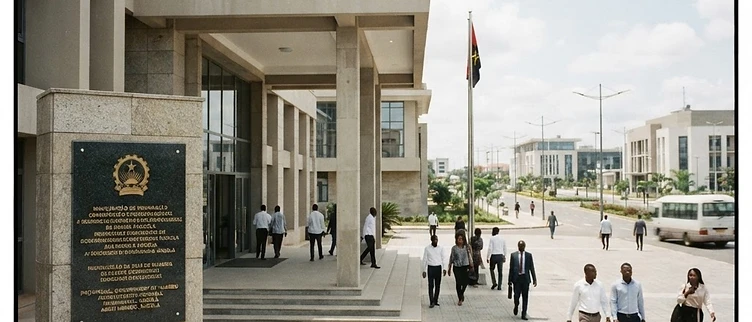
Illustration. AI-generated editorial image, not a documentary photograph.
The proposed 50 per cent increase in Huambo Province's 2027 budget is being framed as a development breakthrough, but it functions as a mechanism for centralizing political control ahead of the next electoral cycle. By prioritizing large-scale infrastructure projects over granular, ward-level service delivery, the provincial administration is effectively bypassing local accountability structures. This strategy risks deepening the public trust deficit while failing to address the immediate needs of residents in municipalities like Caála and Chilata.
Key judgement
The 50 per cent budget increase in Huambo is a strategic maneuver to centralize patronage rather than a genuine effort to improve grassroots service delivery. Evidence suggests this will lead to a further decline in public trust as high-visibility projects fail to address the immediate, granular needs of the province's residents.
The rating rests on the correlation between pre-election spending patterns and the lack of transparent oversight in provincial procurement, which would change if independent audits of the 2027 budget were mandated.
What to watch
- 2026-10-28: Closing of the public works tender for health centers in Chilata to see if contract awards follow established patronage networks.
- 2027-01-15: Release of the first quarter budget execution report to determine if funds are being directed toward actual service delivery or administrative overhead.
Implications for decision-makers
- Provincial officials face a heightened risk of public backlash if the promised infrastructure projects fail to materialize by the next electoral cycle.
- Political strategists should focus on the gap between government spending and local service outcomes to build a compelling alternative narrative for voters.
- Development organizations should prioritize independent monitoring of provincial procurement to ensure that funds are not diverted for political patronage.
The Illusion of Fiscal Expansion
The recent announcement that Huambo Province will increase its 2027 budget by 50 per cent, rising from 361 billion kwanzas, has been met with predictable fanfare by provincial authorities. While the administration frames this as a bold commitment to local development, the reality is a calculated exercise in political optics designed to consolidate influence ahead of the upcoming electoral cycle. By inflating the budget, the government creates a narrative of prosperity that obscures the persistent, structural failures in basic service delivery that continue to plague the province's grassroots communities.
This budgetary expansion is not a bottom-up response to the needs of the people, but a top-down directive that prioritizes high-visibility projects over the mundane, essential work of governance. In the context of Angola’s broader political landscape, where pre-election spending often serves as a tool for patronage, this surge in funding is a classic campaign operation. It allows the provincial leadership to claim credit for 'development' while maintaining tight control over the allocation of resources, effectively sidelining local councillors and ward-level stakeholders who are best positioned to identify community priorities.
The Governance Gap in Huambo
Governance in Huambo is currently defined by a widening chasm between official policy announcements and the lived reality of its residents. While the provincial government highlights 14 new development initiatives, the actual implementation of these projects remains opaque and disconnected from the daily struggles of the population. The reliance on large-scale, centralized procurement processes—such as the recent tender for the rehabilitation of health centers in Chilata—often results in delays, cost overruns, and a lack of transparency that undermines public confidence.
Our analysis of the current administrative performance reveals that the provincial government is failing to leverage existing infrastructure effectively. For instance, while the Caála cold storage platform is touted as a success, the broader agricultural value chain remains underdeveloped, leaving local farmers without the necessary support to access markets. This is not merely a failure of management; it is a failure of accountability, where the lack of robust oversight mechanisms allows the provincial executive to operate with minimal scrutiny from the local legislative bodies.
Grassroots Realities vs. Provincial Rhetoric
The community layer of this story is one of neglected potential. In municipalities like Caála and Chilata, residents continue to face significant challenges in accessing clean water, reliable healthcare, and basic education. Despite the rhetoric of 'inclusive development,' the actual impact of provincial spending on the ground is minimal. The recent focus on large-scale water systems, while necessary, often ignores the 'last mile' connectivity that determines whether a household actually receives water, leaving thousands of residents in a state of perpetual waiting.
Furthermore, the political influence of traditional rulers and local community leaders is being systematically co-opted by the provincial administration to provide a veneer of legitimacy to these top-down projects. By engaging these figures in ceremonial roles rather than substantive policy discussions, the government ensures that local dissent is managed and contained. This strategy effectively silences the grassroots voices that could provide the most accurate assessment of the province's actual needs, replacing genuine community engagement with performative political theatre.
The Procurement Trap
The procurement process for public works in Huambo serves as a primary indicator of the province's governance health. The recent tender for the rehabilitation and equipping of health centers in Chilata, with a closing date of October 28, 2026, is a case in point. While the project is essential, the timing and the structure of the tender suggest a rush to commit funds before the end of the fiscal year, rather than a strategic, long-term plan for healthcare improvement. This 'end-of-year' spending spree is a common feature of Angolan local government, designed to exhaust budgets and justify future increases, regardless of the quality or necessity of the work performed.
For political strategists, this dynamic is a critical area of focus. The ability to control the flow of contracts and the timing of project launches is a powerful tool for building and maintaining political networks. By ensuring that these contracts are awarded to loyalists or firms with close ties to the provincial elite, the administration creates a self-reinforcing cycle of patronage that makes it difficult for opposition candidates to gain a foothold. This is not just about infrastructure; it is about the structural capture of the local economy.
Rebutting the 'Development First' Narrative
Critics of our analysis will argue that any increase in funding is inherently positive and that the provincial government should be commended for securing additional resources for Huambo. They will point to the potential for job creation and the long-term benefits of improved infrastructure as evidence that the current strategy is sound. This perspective, however, ignores the fundamental issue of efficiency and the opportunity cost of centralized spending. When funds are directed toward projects that are poorly planned or misaligned with local needs, the result is not development, but waste.
Furthermore, the argument that 'some spending is better than no spending' fails to account for the long-term damage caused by the erosion of public trust. When citizens see large sums of money being spent on projects that do not improve their daily lives, their cynicism toward the political process deepens. This cynicism is a significant barrier to democratic participation and makes it easier for incumbents to maintain power through apathy rather than performance. True development requires not just more money, but a fundamental shift in how that money is managed and who is held accountable for its outcomes.
The Role of Political Intelligence
At Apex Africa, we believe that understanding these dynamics is essential for any political actor looking to compete effectively in the current environment. Our Political Intelligence service provides the granular data and analysis needed to navigate the complex web of patronage and power that defines local government in Angola. By mapping the relationships between provincial officials, contractors, and local community leaders, we help our clients identify the vulnerabilities in the incumbent's strategy and develop targeted, evidence-based campaigns that resonate with the electorate.
This is not about manipulating the system, but about understanding it well enough to offer a credible alternative. In Huambo, this means focusing on the gap between the government's promises and the reality on the ground. By highlighting the failures in service delivery and proposing concrete, actionable solutions, opposition candidates can build a platform that speaks directly to the concerns of the people. This requires a deep understanding of the local political economy, which is exactly what our research and analytics services provide.
Future Scenarios and Indicators
Looking ahead, we anticipate two primary scenarios for Huambo Province. In the first, the provincial government continues its current trajectory, using the 2027 budget to fuel a cycle of patronage that secures its position in the short term but leads to a further decline in public trust and service quality. The indicator to watch here is the rate of project completion; if the majority of the 14 new initiatives remain stalled or incomplete by mid-2027, it will confirm that the budget was primarily a political tool.
In the second scenario, mounting public pressure and the potential for electoral backlash force the provincial government to adopt a more transparent and accountable approach to spending. The indicator to watch is the level of engagement with local civil society organizations and the willingness of the provincial assembly to conduct independent audits of the new budget. If we see a shift toward more participatory budgeting and a genuine effort to address the 'last mile' service delivery issues, it would signal a significant, if overdue, change in the province's governance trajectory.
Strategic Implications for Stakeholders
For policymakers and public officials, the implication is clear: the current model of centralized, top-down development is reaching its limits. To maintain legitimacy, they must move toward a more decentralized and accountable system that empowers local municipalities to manage their own resources. This requires a commitment to transparency and a willingness to subject their performance to independent scrutiny, which will be a difficult but necessary transition for the provincial leadership.
For political strategists and campaign leadership, the opportunity lies in the growing disconnect between the government's narrative and the public's experience. By focusing on the tangible failures of the current administration and offering a clear, alternative vision for local governance, they can tap into the widespread frustration that exists at the grassroots level. The key is to move beyond rhetoric and provide concrete, evidence-based policy proposals that address the specific needs of the communities they seek to represent. We invite you to contact us at https://apexafricastrategy.com for a confidential consultation on how to leverage these insights for your campaign.