Article · DR Congo
Goma’s Administrative Capture: Why the FRN Coalition Is Not a Resistance Movement but a Resource-Extraction Cartel
The rise of the Kabila-M23 alliance in North Kivu signals the death of grassroots democracy in eastern DR Congo.
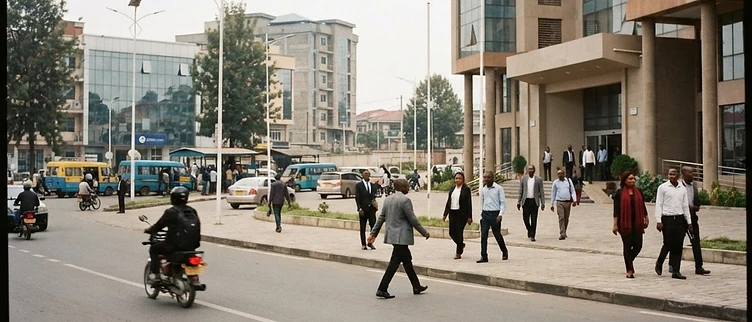
The emergence of the Front for the Refoundation of the Nation (FRN) in Goma is widely misread as a genuine political insurgency against Kinshasa. In reality, this coalition represents a sophisticated administrative capture designed to formalize the illegal extraction of mineral wealth under the guise of governance. Apex Africa’s analysis reveals that local political structures in North Kivu have been hollowed out to serve as a tax-collection apparatus for a new, militarized elite.
The Myth of the Goma Insurgency
Observers of the Democratic Republic of Congo’s eastern theater frequently fall into the trap of viewing the March 23 Movement (M23) and its new political vehicle, the Front for the Refoundation of the Nation (FRN), through the lens of traditional revolutionary politics. The conventional narrative suggests that the October 2026 launch of the FRN by former President Joseph Kabila in Goma represents a grassroots-led pushback against the perceived tyranny of the current administration in Kinshasa. This reading is fundamentally flawed, as it ignores the structural reality that the FRN is not a political movement seeking to win hearts and minds, but a corporate-military entity seeking to consolidate territorial control over the world’s most lucrative coltan deposits.
By anchoring their operations in Goma, the capital of North Kivu, the FRN has effectively bypassed the need for electoral legitimacy. Instead of engaging in the messy, unpredictable work of ward-level mobilization or local government council elections, the coalition has opted for administrative capture. They have replaced national police and civil service institutions with their own internal security apparatus, ensuring that the 'grassroots' are not participants in a democratic process, but subjects of a tax-extraction regime. This is not a political awakening; it is a hostile takeover of the state’s local functions.
At Apex Africa, our Political Intelligence services have tracked how this shift fundamentally alters the calculus for any candidate or organization attempting to operate in the region. When a rebel coalition controls the municipal tax office, the traditional role of a local government chairman is rendered obsolete. The power dynamics have shifted from the ballot box to the mining pit, and any strategy that ignores this reality is destined for failure. We advise our clients to recognize that in Goma, the 'political' is now entirely subordinate to the 'extractive'.
The Economics of Administrative Capture
To understand why the FRN is succeeding where previous rebel groups failed, one must look at the fiscal architecture of their occupation. Since the capture of Goma in January 2025, the M23 and its allies have demonstrated a sophisticated understanding of local revenue streams. By embedding themselves in the local administration, they have turned the city into a hub for the systematic taxation of trade, particularly the movement of rare earth minerals from towns like Rubaya. This is not merely looting; it is the institutionalization of a shadow economy that funds the coalition’s military expansion.
This fiscal control allows the FRN to maintain a level of stability that is often mistaken for popular support. When a regime can pay its soldiers and provide a semblance of order in the marketplace, the local population—exhausted by decades of conflict—often chooses survival over resistance. The 'governance' provided by the FRN is a transactional arrangement: the population is permitted to trade, provided they pay the required levies to the coalition’s communications and finance departments. This is the antithesis of democratic governance, yet it is the most stable political structure currently operating in North Kivu.
Our research into local government dynamics shows that this model is being exported to other parts of the province. By controlling the administrative levers of Goma, the FRN can dictate the terms of engagement for local traditional rulers and ward leaders. These figures, who once served as the bridge between the state and the people, are now forced to act as intermediaries for the coalition. The result is a hollowed-out local government structure that exists only to facilitate the extraction of resources for the benefit of the FRN leadership.
The Kabila-M23 Coalition as a Strategic Cartel
The inclusion of former President Joseph Kabila in the FRN leadership is the final piece of the puzzle that confirms the coalition’s true nature. Critics often argue that Kabila’s involvement provides a veneer of national legitimacy to the M23’s military gains. However, this is a misinterpretation of the power balance. Kabila is not leading a movement; he is providing a political brand to a military-industrial complex that already controls the territory. This is a strategic merger of convenience, designed to protect the interests of a displaced political elite while securing the mineral wealth of the east.
This coalition is a cartel, not a political party. Its structure—with Corneille Nangaa, Bertrand Bisimwa, and Sultani Makenga in key leadership roles—is designed to manage the competing interests of military commanders and political operators. By uniting these factions, the FRN has created a unified front that is far more dangerous than the fragmented rebel groups of the past. They have successfully integrated the military might of the M23 with the political networks of the former regime, creating a formidable barrier to any attempt by Kinshasa to reassert control.
For those involved in Election Strategy, the FRN’s rise presents a unique challenge. How does one compete in a political environment where the opposition has effectively privatized the state? The answer lies in understanding that the FRN’s strength is also its greatest vulnerability: its reliance on the continued extraction of resources. If the flow of wealth is disrupted, the coalition’s internal cohesion will likely fracture. Our intelligence suggests that the coalition is already struggling to balance the demands of its various stakeholders, a weakness that can be exploited by those who understand the underlying economic incentives.
Rebutting the 'Resistance' Narrative
The strongest objection to our thesis is that the FRN represents a legitimate, if militant, response to the failures of the current government. Proponents of this view point to the widespread dissatisfaction with the Kinshasa administration’s inability to secure the eastern provinces. They argue that the FRN is merely filling a vacuum left by a state that has abandoned its citizens. While it is true that the state’s presence in North Kivu has been weak, it is a logical fallacy to equate the FRN’s occupation with a democratic alternative.
The FRN does not seek to restore the pillars of a functioning republic, as their rhetoric claims. Instead, they seek to replace the state with a system that is more efficient at extraction. The evidence is clear: the closure of local radio stations, the targeting of journalists and activists, and the requirement for prior authorization from the M23 communications department for any reporting are not the actions of a movement seeking to empower the people. These are the actions of a regime that fears transparency and dissent. The 'resistance' narrative is a marketing tool, not a political program.
Furthermore, the claim that the FRN is a grassroots movement is contradicted by the reality of forced recruitment and the militarization of daily life in Goma. A movement that relies on the coercion of young men and the silencing of civil society cannot claim to represent the will of the people. The FRN is a top-down structure that imposes its will on the population, using the language of liberation to mask the reality of exploitation. To accept the 'resistance' narrative is to ignore the lived experience of the people of Goma, who are the primary victims of this administrative capture.
The Future of North Kivu: Three Scenarios
As we look toward the future, the trajectory of the FRN will be determined by three primary factors: the stability of the mineral markets, the internal cohesion of the coalition, and the response from Kinshasa. The first scenario is the 'Consolidation of the Cartel', where the FRN successfully formalizes its control over the mining sector, leading to a long-term, de facto partition of the eastern provinces. In this scenario, the FRN becomes a permanent fixture, and the international community is forced to engage with them as the de facto authority in North Kivu.
The second scenario is the 'Internal Fracture', where the competing interests of the M23 military commanders and the political elite around Kabila lead to a breakdown in the coalition. This is a high-probability outcome, as the distribution of mineral wealth is a constant source of friction. If the coalition fails to manage these internal tensions, we can expect a return to the fragmented conflict that characterized the region for decades. Observers should watch for signs of infighting among the leadership, particularly regarding the control of key mining towns like Rubaya.
Finally, the third scenario is the 'Kinshasa Counter-Offensive', where the government in the capital manages to leverage international pressure and military support to disrupt the FRN’s supply lines. This would require a significant shift in the regional security architecture and a renewed commitment to local governance. While currently unlikely, this scenario remains a possibility if the FRN’s activities begin to threaten the broader stability of the Great Lakes region. The key indicator here is the level of international involvement in the conflict and the willingness of neighboring states to enforce sanctions on the illegal mineral trade.
The Role of Political Intelligence in Navigating the Crisis
Navigating the current political landscape in DR Congo requires more than just an understanding of national-level politics; it requires a deep, granular knowledge of local dynamics. At Apex Africa, we provide the Political Intelligence necessary to understand how these local structures are being manipulated by actors like the FRN. Our clients—whether they are political organizations, international NGOs, or private sector entities—rely on our research to identify the risks and opportunities in this volatile environment.
We believe that the only way to counter the influence of groups like the FRN is through the strengthening of genuine, grassroots democratic institutions. This means supporting local leaders who are committed to transparency and accountability, rather than those who are merely intermediaries for the coalition. Our Campaign Operations services are designed to help such leaders build the infrastructure necessary to compete in an environment where the odds are stacked against them. We provide the tools to mobilize the electorate, communicate effectively, and hold the authorities accountable.
In a region where the state has been captured by a cartel, the most radical act is to build a parallel, transparent political structure. This is not an easy task, but it is the only way to ensure that the future of North Kivu is determined by its people, not by the interests of a few powerful individuals. We invite those who are committed to this vision to partner with us. Our team of experts is ready to provide the strategic guidance needed to navigate the complexities of the current crisis and build a more democratic future.
Conclusion: The Path Forward
The situation in Goma is a stark reminder of the fragility of democracy in the face of organized, resource-driven insurgency. The FRN’s administrative capture of the city is a masterclass in how to subvert the state from within, and it serves as a warning to all who believe that the ballot box is the only path to power. The reality is that in the eastern DR Congo, power is currently held by those who control the flow of resources, and until this is addressed, the political process will remain a fiction.
However, this is not a reason for despair. It is a call to action for those who believe in the power of grassroots mobilization and the importance of local governance. The FRN’s model is built on the exploitation of the population, and it is inherently unstable. By exposing the reality of their rule and building alternative, transparent structures, it is possible to challenge their hegemony. The path forward is difficult, but it is the only way to reclaim the future of the region.
We at Apex Africa are committed to supporting those who are willing to take on this challenge. We provide the intelligence, strategy, and operational support needed to navigate the most difficult political environments in Africa. If you are ready to engage in the work of building a more democratic and accountable future, we invite you to request a confidential consultation at https://apexafricastrategy.com. Together, we can turn the tide against the forces of administrative capture and build a future that belongs to the people of the DR Congo.
- Human Rights Watch — DR Congo: Rwanda-Backed M23 Target Journalists, Activists — https://www.hrw.org/news/2025/03/12/dr-congo-rwanda-backed-m23-target-journalists-activists
- BBC — DR Congo violence: Panic in Goma as M23 rebels advance — https://www.bbc.com/news/world-africa-68255614
- DW — Congo: Are M23 rebels really advancing toward Kinshasa? — https://www.dw.com/en/congo-are-m23-rebels-really-advancing-toward-kinshasa/a-74287422
- The Habari Network — The resource factor in the M23 campaign for Goma — https://www.thehabarinetwork.com/the-resource-factor-in-the-m23-campaign-for-goma
- ReliefWeb — ACLED Regional Overview Africa: February 2025 - Democratic Republic of the Congo — https://reliefweb.int/report/democratic-republic-congo/acled-regional-overview-africa-february-2025
- Al Jazeera — Former DR Congo President Kabila joins M23 rebels in a new coalition — https://www.aljazeera.com/news/2026/10/13/former-dr-congo-president-kabila-joins-m23-rebels-in-a-new-coalition