Article · DR Congo
Goma Opposition Groups Adopt Clandestine Tactics Following Kinshasa’s October 26 Party Suspension Directive
The suspension of opposition activities in DR Congo forces a shift from open campaigning to clandestine survival.
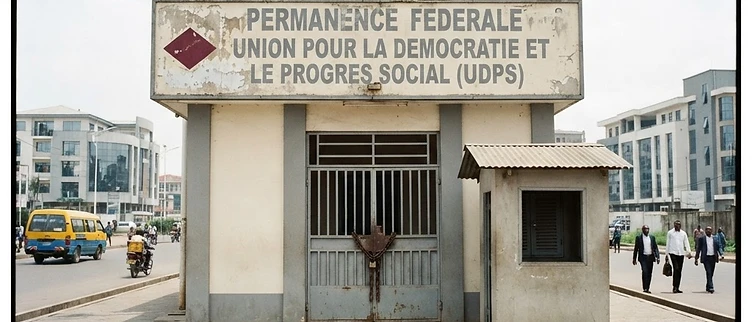
Illustrative image. AI-generated; it does not depict the event described.
The October 26, 2026, government directive suspending 13 opposition parties marks a definitive shift from political competition to state-led containment. By targeting the grassroots infrastructure of parties like the PPRD, the administration is effectively decapitating the opposition's ability to mobilize ahead of the 2027 cycle. This move forces political actors to abandon traditional campaign operations in favor of high-risk, underground survival strategies.
Key judgement
The suspension of opposition parties is a deliberate strategy to eliminate grassroots competition ahead of the 2027 elections, forcing political activity into clandestine channels. This will likely lead to increased political volatility and a further decline in the legitimacy of the current administration.
The assessment is based on the official government directive reported by multiple sources and the clear, observable pattern of state-led suppression of political infrastructure.
What to watch
- 2026-11-01: Monitor for reports of arrests of local party officials in Goma and other major cities.
- 2026-11-15: Watch for any official response from the electoral commission regarding the impact of the suspensions on the 2027 electoral calendar.
- 2026-12-01: Observe if the government extends the suspension to other civil society organizations or media outlets.
Implications for decision-makers
- Opposition parties must immediately transition to decentralized, digital-first communication strategies to maintain organizational continuity.
- International development partners should reassess their engagement with the Congolese government, given the clear erosion of democratic space.
- Local political actors face increased personal risk and must prioritize security and operational resilience over public mobilization.
The End of Open Political Competition
On October 26, 2026, the administration of President Félix Tshisekedi issued a directive that fundamentally alters the landscape of Congolese democracy. Interior Minister Jacquemain Shabani announced the immediate suspension of 13 opposition parties, citing national security concerns linked to the emergence of the National Refoundation Front (FRN) in Goma. This is not merely a security measure; it is a calculated strike against the organizational capacity of the political opposition at the grassroots level.
By tasking provincial governors with the enforcement of this ban, the central government has effectively criminalized the daily operations of parties such as the People’s Party for Reconstruction and Democracy (PPRD). For local organizers in regions like North Kivu, this means the immediate closure of ward-level offices and the cessation of public mobilization activities. The state is no longer competing for the electorate; it is actively dismantling the infrastructure required for any challenger to mount a credible campaign.
This development represents a terminal departure from the democratic norms that have governed the electoral cycle since 2006. When a government uses the pretext of 'national security' to shutter the offices of former Prime Minister Matata Ponyo’s Leadership and Governance for Development party, it signals that the 2027 electoral process is being pre-emptively managed. The political intelligence gathered by our firm suggests that this is a top-down effort to ensure that no opposition entity can maintain a coherent presence in the provinces.
The Grassroots Vacuum
In the context of Election Readiness, the suspension of these parties creates a dangerous vacuum in local governance. Grassroots mobilization is the lifeblood of any electoral campaign, relying on a network of ward congresses and local coordinators to translate national messaging into local votes. By forcing these structures underground, the government has ensured that the only remaining political activity will be clandestine, fragmented, and increasingly radicalized.
Local government chairmen and councillors, who previously served as the bridge between the national party leadership and the rural electorate, are now effectively neutralized. Without the ability to hold meetings or coordinate voter outreach, these local actors are left with two choices: defect to the ruling coalition or face the risk of state-sanctioned harassment. This is a masterclass in political containment that leaves the opposition without a physical footprint in the very areas where they need to build momentum.
For the residents of Goma and surrounding areas, this means that the local political discourse is being silenced. The schools, clinics, and community centers that often serve as hubs for political engagement are now under intense surveillance. The government’s decision to link these parties to the M23 rebel movement provides a convenient, if unproven, justification for this crackdown, effectively silencing any legitimate criticism of public service delivery failures.
The Governance of Fear
Governance intelligence reveals that this crackdown is not an isolated incident but part of a broader trend of administrative overreach. The government’s failure to deliver on basic infrastructure and economic stability has left it vulnerable to electoral challenge. Rather than addressing these failures through policy reform, the administration has chosen to eliminate the competition. This is a classic case of a regime prioritizing its own survival over the health of the democratic process.
When the state uses the Ministry of the Interior to bypass the electoral commission’s authority, it undermines the entire institutional framework of the country. The lack of transparency in how these 13 parties were selected for suspension suggests a lack of due process. There is no evidence provided to the public that these specific parties were involved in insurrectionist activities, yet they are being treated as existential threats to the state.
This approach to governance creates a culture of fear that permeates every level of public administration. Civil servants, who are supposed to remain neutral, are now being pressured to align with the ruling party’s agenda. The result is a degradation of public service delivery, as resources are diverted from essential projects to support the state’s surveillance and suppression apparatus.
Rebutting the Security Narrative
Critics of this analysis might argue that the government is acting in good faith to protect the nation from the instability caused by the FRN. They point to the security situation in the east as a legitimate reason for restricting political activity. However, this argument fails to account for the fact that the suspension of these parties does nothing to address the root causes of the conflict in North Kivu.
If the government were truly concerned about security, it would be engaging in dialogue with all political stakeholders to build a national consensus. Instead, it is using the conflict as a tool to consolidate power. The suspension of parties like the Union for African Democracy is a political act, not a security one. It is designed to weaken the opposition’s ability to organize, not to strengthen the state’s ability to defend its borders.
Furthermore, the history of Congolese politics shows that suppressing opposition parties only leads to increased instability. When people are denied a peaceful, institutional outlet for their political grievances, they are more likely to turn to extra-legal means. By closing the door on democratic participation, the government is inadvertently fueling the very insurgency it claims to be fighting.
The Role of Apex Africa Strategy
At Apex Africa, our Election Readiness service is designed to help political organizations navigate exactly these kinds of hostile environments. We provide the intelligence and strategic planning necessary to maintain organizational integrity when the state is actively working to dismantle your operations. In a climate where public meetings are banned and offices are shuttered, the focus must shift to digital mobilization and decentralized communication networks.
Our data intelligence tools allow campaigns to map their support base and maintain contact with voters without relying on traditional, vulnerable physical structures. We help leaders understand the shifting political arithmetic of their constituencies and develop contingency plans for when the state attempts to disrupt their operations. The goal is to ensure that even in the face of severe repression, the campaign remains viable and ready for the next electoral opportunity.
Political intelligence is not just about knowing what the government is doing; it is about understanding the structural dynamics that allow them to do it. By analyzing the patterns of state intervention, we can help our clients anticipate the next move and position themselves to survive and eventually thrive. The current situation in DR Congo is a stark reminder that in the absence of a level playing field, strategy is the only thing that keeps a campaign alive.
Scenarios for the Coming Months
Looking ahead, there are three likely scenarios for how this situation will develop. In the first, the government continues its crackdown, leading to a complete collapse of the opposition’s organizational capacity and a non-competitive 2027 election. This would likely result in increased civil unrest and a further decline in the legitimacy of the Tshisekedi administration.
In the second scenario, the opposition manages to adapt by moving its operations into the digital space and forming new, less visible coalitions. This would force the government to escalate its repression, potentially leading to international condemnation and a crisis of governance. The key indicator to watch here is the level of international pressure on the government to restore political pluralism.
In the third scenario, the government faces internal pressure from within its own coalition to ease the restrictions, as the cost of maintaining such a high level of repression becomes unsustainable. This would likely lead to a partial lifting of the ban, but with strict conditions that still favor the ruling party. The trigger for this would be a significant decline in the government’s popularity or a major economic crisis that forces a change in strategy.
Strategic Implications for Stakeholders
For policymakers and political strategists, the implication is clear: the era of open, traditional campaigning in DR Congo is over for the time being. Those who wish to remain relevant must pivot to more resilient, decentralized models of organization. This requires a significant investment in secure communication technologies and a shift in focus from public rallies to targeted, private outreach.
For NGOs and development organizations, the focus must shift to protecting the space for civil society and monitoring the government’s human rights record. The suspension of these parties is a clear violation of democratic norms, and it must be documented and challenged at every level. The risk of inaction is the total erosion of the democratic space that has been built over the last two decades.
Finally, for the political leadership of the affected parties, the recommendation is to prioritize the safety of their members while maintaining their organizational structure. Do not attempt to challenge the ban through public protests that will only lead to further arrests. Instead, focus on building a resilient, underground network that can be activated when the political climate shifts. The goal is to survive the current period of repression and be ready to compete when the opportunity arises.
Conclusion
The suspension of 13 opposition parties is a defining moment for the future of democracy in DR Congo. It is a clear signal that the government is willing to sacrifice the country’s democratic credentials to maintain its grip on power. The challenge for the opposition is to find a way to survive this onslaught and continue to represent the interests of the people who have been silenced.
This is not a time for despair, but for strategic adaptation. The political landscape is shifting, and those who can navigate these changes will be the ones who shape the future of the country. At Apex Africa, we are committed to providing the intelligence and strategy needed to navigate these turbulent times. We invite you to contact us for a confidential consultation to discuss how we can help your organization prepare for the challenges ahead.
To request a confidential consultation, please visit https://apexafricastrategy.com.