Article · Botswana
Gaborone City Council: The UDC’s Administrative Paralysis Is the Death Knell of the Opposition’s National Credibility
The capital city’s governance crisis reveals that the Umbrella for Democratic Change is failing to transition from a protest movement to a governing entity.
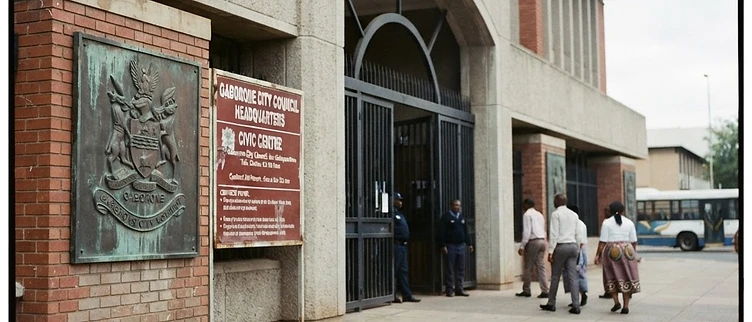
Illustrative image. AI-generated; it does not depict the event described.
The recent administrative collapse within the Gaborone City Council exposes a fatal inability of the UDC to manage urban governance, threatening their national mandate. This crisis proves that without a shift from protest-based politics to rigorous institutional management, the opposition's historic 2024 victory will be short-lived.
The Myth of the Seamless Transition
The conventional narrative surrounding Botswana’s 2024 general election suggests that the Umbrella for Democratic Change (UDC) victory was a triumph of democratic maturity. Observers point to the peaceful transfer of power as evidence of a robust, functioning democracy. However, this reading is dangerously incomplete. The reality on the ground in the Gaborone City Council (GCC) tells a far more precarious story. The recent postponement of council proceedings due to internal fractures is not merely a procedural hiccup; it is a symptom of a structural inability to govern. The UDC, having spent decades as a protest movement, is now discovering that the mechanics of state power require a level of discipline and administrative coherence that their current coalition structure simply cannot provide.
The Gaborone Laboratory of Failure
If the UDC cannot maintain order in the capital city, they have no hope of sustaining a national mandate. The Gaborone City Council has become a laboratory for the party’s internal contradictions. When Mayor Oarabile Motlaleng was forced to postpone council sittings in October 2026, it exposed a leadership vacuum that transcends mere personality clashes. The council is currently paralyzed by a lack of administrative authority and a failure of coordination between the executive and the legislative wings of the local government. This is not a case of 'teething problems' for a new administration; it is a fundamental failure of the UDC’s internal party machinery to translate electoral success into municipal service delivery. The residents of Gaborone are witnessing a government that is more interested in internal power struggles than in the basic functions of urban management, such as revenue collection and infrastructure maintenance.
The Fallacy of the 'Protest-to-Governance' Pivot
The strongest objection to this analysis is that the UDC is still in its infancy as a ruling party and that these tensions are natural in a post-BDP landscape. Critics argue that the 'state capture' legacy left by the previous administration has created a bureaucratic quagmire that would challenge any new government. While it is true that the transition is complex, this argument fails to account for the UDC’s own agency. The paralysis in Gaborone is not a result of external sabotage; it is a result of the UDC’s failure to professionalize its operations. They have treated the council as a political battlefield rather than an administrative office. By prioritizing factional loyalty over technical competence, the UDC is actively dismantling the very institutional trust they campaigned on. The 'protest-to-governance' pivot is not a natural evolution; it is a deliberate strategic choice that the UDC has failed to make.
Why Political Intelligence Is the Missing Link
At Apex Africa Strategy & Intelligence, we have observed that political organizations often fail because they lack the necessary data-driven infrastructure to manage their own internal dynamics. The UDC’s crisis in Gaborone is a classic case of a party that won the election but lost the campaign. They lack the Political Intelligence required to map internal power centers, anticipate administrative bottlenecks, and align their councillors with a unified policy agenda. Without a rigorous, data-backed approach to internal party management, the UDC is essentially flying blind. They are reacting to crises as they emerge rather than proactively managing the political environment. Our firm specializes in helping leaders navigate these exact dynamics—transforming raw political power into stable, effective governance through precise research and strategic alignment.
The 2029 Reckoning
The clock is already ticking toward the 2029 elections. If the UDC continues to treat the Gaborone City Council as a site for internal squabbling, they will provide the Botswana Democratic Party (BDP) with the perfect ammunition to reclaim the narrative of 'competence' versus 'chaos.' The opposition’s historic 2024 victory was a mandate for change, not a blank check for incompetence. If the UDC cannot demonstrate that they can manage the capital city, the electorate will inevitably conclude that the transition was a mistake. The party must urgently pivot toward a model of governance that prioritizes institutional stability over factional dominance. Failure to do so will not just result in a lost council; it will result in a lost nation.
Secure Your Strategic Advantage
Political success is not a static achievement; it is a continuous process of adaptation and intelligence-led decision-making. Whether you are navigating a complex coalition, managing internal party dissent, or preparing for the next electoral cycle, you need a partner who understands the structural realities of African politics. Do not leave your political future to chance or outdated assumptions. Request a confidential consultation with our team at https://apexafricastrategy.com to ensure your organization is equipped to lead, govern, and win.