Article · Tanzania
Chamwino Constituency: The By-Election Mirage Is a Strategic Shackling of Dodoma’s Political Autonomy
The upcoming parliamentary contest in Dodoma is not a democratic exercise but a calculated consolidation of power.
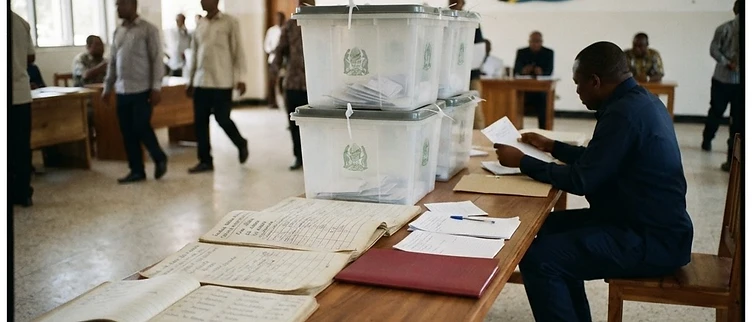
Illustrative image. AI-generated; it does not depict the event described.
The Chamwino parliamentary by-election is being framed as a routine democratic process, but it serves as a strategic instrument for the ruling CCM to solidify its grip on the administrative heart of Tanzania. By leveraging the state's security apparatus and controlling the electoral narrative, the government is effectively neutralizing local dissent. This analysis argues that the by-election is a controlled political theater designed to mask the erosion of grassroots autonomy in the capital region.
The Illusion of Electoral Competition in Dodoma
The upcoming parliamentary by-election in Chamwino Constituency, scheduled for November 4, 2026, is being presented by the Independent National Electoral Commission as a standard democratic procedure. However, to view this contest as a genuine expression of voter preference is to ignore the structural reality of Tanzanian politics in the post-2025 era. The constituency, located in the heart of the Dodoma Region, has become the epicenter of a calculated effort by the Chama Cha Mapinduzi (CCM) to demonstrate total political dominance. By framing this by-election as a routine administrative necessity, the ruling party masks a deeper, more aggressive strategy of political containment that leaves no room for authentic opposition.
This by-election is not merely about filling a vacant seat; it is a litmus test for the government's ability to manage local political dynamics while maintaining a facade of electoral legitimacy. The recent charging of senior Chadema figure John Pambalu with treason on October 22, 2026, serves as a clear signal to any potential challengers in the Dodoma region. The state is no longer content with merely winning elections; it is actively criminalizing the organizational infrastructure of the opposition. This development, occurring just days before the by-election campaign concludes, demonstrates that the electoral environment is being shaped by the judiciary and security services rather than by the ballot box.
For political strategists, the Chamwino contest provides a masterclass in how the ruling party utilizes the state apparatus to stifle competition. The deployment of security forces and the selective application of the law are not incidental; they are core components of a strategy designed to ensure that the outcome is predetermined. By focusing on a specific, high-profile constituency, the CCM can concentrate its resources and surveillance capabilities, effectively turning the local electoral process into a demonstration of state power. This is the reality of governance in Tanzania today: a system where the appearance of democracy is maintained through the systematic dismantling of the opposition's capacity to organize.
The Geopolitical Significance of the Dodoma Heartland
Dodoma is not just another region; it is the administrative and political capital of Tanzania. The control of Chamwino Constituency is therefore a matter of national strategic importance for the CCM. The party’s ability to maintain absolute control over the capital region is essential for projecting stability to both domestic and international observers. Any sign of weakness or electoral volatility in Dodoma would undermine the narrative of a unified, stable nation that the government has worked to cultivate since the 2025 general elections. Consequently, the by-election is being treated as a high-stakes operation where failure is not an option.
This regional focus allows the government to test new methods of political control that can be scaled nationally. By monitoring the effectiveness of its current strategy in Chamwino, the CCM can refine its approach to future electoral cycles. The use of regional commissions to investigate election-related violence, as seen in the probe launched in August 2026, provides the state with a legalistic framework to justify the suppression of dissent. This is a sophisticated form of political intelligence gathering that allows the ruling party to identify and neutralize potential threats before they can coalesce into a broader movement.
Furthermore, the economic stakes in Dodoma are significant. As the seat of government, the region is the primary beneficiary of public infrastructure projects and administrative spending. The CCM’s control over these resources is a powerful tool for patronage and voter mobilization. By linking the by-election outcome to the continued delivery of services and development projects, the party creates a direct incentive for local communities to support the status quo. This is not just about ideology; it is about the material reality of governance and the power of the state to reward loyalty and punish dissent.
The Governance Gap: Implementation vs. Rhetoric
While the government promotes its development agenda in Dodoma, the reality on the ground often tells a different story. The gap between the promises made during election cycles and the actual delivery of public services is a persistent issue that the current political climate seeks to obscure. In Chamwino, residents are frequently promised improvements in water access, healthcare, and education, yet these projects often stall due to bureaucratic inefficiency or the diversion of funds. The by-election serves as a distraction from these failures, shifting the focus from accountability to the performative aspects of the campaign.
Accountability mechanisms, such as the office of the Auditor-General and parliamentary oversight committees, are increasingly constrained by the political environment. When the ruling party holds a near-total monopoly on power, the incentive for rigorous oversight disappears. The result is a system where corruption and mismanagement can flourish under the guise of administrative necessity. The recent public outcry over corruption in the power sector, reported in late October 2026, is a symptom of this broader governance crisis. Without a robust opposition to hold the government accountable, the cycle of inefficiency and neglect is likely to continue.
For the residents of Chamwino, the by-election is a reminder of their limited agency in the face of a centralized state. Their concerns about the cost of living, access to basic services, and the quality of local infrastructure are secondary to the party’s goal of maintaining control. The government’s strategy is to keep the population focused on the immediate, short-term benefits of the election while ignoring the long-term structural issues that affect their daily lives. This is a deliberate strategy of political disempowerment that relies on the apathy and resignation of the electorate.
Rebutting the Stability Narrative
Critics of this analysis might argue that the government’s actions are necessary to maintain stability in a volatile region. They would point to the 2025 election violence as evidence that a firm hand is required to prevent the country from descending into chaos. This argument, however, is a false dichotomy. Stability does not require the suppression of political competition; it requires the inclusion of diverse voices and the establishment of transparent, accountable institutions. The current approach, which prioritizes control over consensus, is actually a catalyst for long-term instability.
By systematically excluding the opposition and criminalizing dissent, the government is creating a pressure cooker environment where grievances have no legitimate outlet. This is not stability; it is a temporary suppression of conflict that will inevitably resurface in more destructive forms. The reliance on security forces and the judiciary to manage political outcomes is a sign of institutional weakness, not strength. A truly stable system would be confident enough to allow for genuine competition and would view the opposition as a necessary partner in the democratic process, not as an existential threat.
Furthermore, the claim that the current political order is the only way to ensure development is contradicted by the evidence of widespread economic hardship. The government’s focus on large-scale projects often ignores the needs of the most vulnerable, leading to increased inequality and social tension. True development requires the participation of all citizens, not just those who are aligned with the ruling party. The current strategy of political containment is a barrier to progress, not a facilitator of it, and it is ultimately unsustainable in the face of growing public dissatisfaction.
Strategic Implications for Stakeholders
For political strategists and campaign leadership, the situation in Chamwino highlights the critical importance of understanding the structural constraints of the current environment. Traditional campaign tactics are insufficient when the playing field is fundamentally tilted. Instead, organizations must focus on building resilient, decentralized networks that can withstand state pressure. This requires a shift from high-profile, centralized campaigning to more targeted, grassroots-level engagement that can bypass the state’s surveillance apparatus.
For NGOs and development organizations, the risk of complicity is high. By engaging with government-led initiatives without demanding accountability, these organizations risk legitimizing a system that is actively undermining democratic norms. It is essential to maintain a clear distinction between humanitarian aid and political support. Organizations should prioritize projects that empower local communities and promote transparency, rather than those that simply reinforce the existing power structure. This requires a more nuanced understanding of the political landscape and a willingness to challenge the government when necessary.
Finally, for policymakers and public officials, the message is clear: the current path is leading to a crisis of legitimacy. The systematic erosion of democratic institutions will eventually undermine the government’s ability to govern effectively. It is in the interest of all stakeholders to advocate for a more inclusive and transparent political process. This includes supporting electoral reforms, protecting the independence of the judiciary, and ensuring that all political actors have equitable access to the media and public resources. The future of Tanzania depends on the ability of its leaders to move beyond the politics of control and embrace the principles of democratic governance.
Future Scenarios and Indicators to Watch
Looking ahead, there are three likely scenarios for how the situation in Chamwino and the broader Tanzanian political landscape will develop. The first is a continuation of the current trend: the CCM maintains its grip on power through the systematic suppression of the opposition, leading to a further decline in democratic standards and increased social tension. Indicators to watch include the frequency of arrests of opposition figures, the tightening of media regulations, and the continued use of the judiciary to resolve political disputes.
The second scenario is a period of managed reform, where the government, under pressure from international partners and domestic civil society, introduces limited changes to the electoral process. This would be a strategic move to improve the country’s international standing and secure continued financial support. Indicators to watch include the implementation of minor electoral reforms, the release of political prisoners, and a slight opening of the media space. However, these reforms would likely be superficial and designed to preserve the core of the current power structure.
The third scenario is a period of increased volatility, where the government’s inability to address the underlying economic and political grievances leads to widespread unrest. This could be triggered by a specific event, such as a failed policy or a controversial election result. Indicators to watch include the emergence of new, decentralized protest movements, the fracturing of the ruling party, and the increased involvement of regional and international actors in the country’s internal affairs. This scenario represents the greatest risk to the current order and would require a fundamental shift in the government’s approach to governance.
The Role of Apex Africa Strategy & Intelligence
Navigating the complex political dynamics of Tanzania requires more than just intuition; it requires rigorous, data-driven analysis and a deep understanding of the structural forces at play. At Apex Africa Strategy & Intelligence, we provide the political intelligence and research necessary for leaders to make informed decisions in an increasingly volatile environment. Our expertise in Election Strategy and Political Research & Analytics allows us to help our clients identify risks, seize opportunities, and build resilient strategies that can withstand the pressures of the current political climate.
Whether you are a political organization looking to build a more effective campaign, or a development organization seeking to navigate the complexities of local governance, our team provides the insights you need to succeed. We understand that the key to winning in the current environment is not just about the message, but about the strategy behind it. By leveraging our expertise in AI & Data Intelligence, we can help you analyze trends, predict outcomes, and develop targeted interventions that deliver results. We are committed to helping our clients navigate the challenges of the modern political landscape and achieve their goals.
If you are ready to take your strategy to the next level, we invite you to request a confidential consultation with our team. We will work with you to develop a customized approach that addresses your specific needs and helps you navigate the complexities of the Tanzanian political landscape. Visit our website at https://apexafricastrategy.com to learn more about our services and how we can help you achieve your objectives. The future of your organization depends on the decisions you make today; let us help you make them with confidence and clarity.
Key Statistics
- 98% - The percentage of the vote the electoral commission declared for President Samia in the 2025 election (Source: Rio Times Online, 2026).
- 18% - The percentage of female candidates at the presidential level in the 2025 general elections (Source: African Union, 2026-10-23).
- 90% - The approximate percentage of national cargo handled by the Dar es Salaam port (Source: CES Intelligence, 2026-10-25).
- 11 - The number of wards across mainland Tanzania holding council elections on November 4, 2026 (Source: Africa News Hunt, 2026-10-14).
Sources
- African Union — Preliminary Statement of the African Union Election Observation Mission to the October 2025 General Elections in The United Republic of Tanzania — https://au.int/en/pressreleases/20251105/aueom-preliminary-statement-october-2025-general-elections-tanzania — 2026-10-23
- CES Intelligence — Tanzania 2026 Geopolitical Risk Assessment: The Quiet Corridor — https://www.ces-intelligence.com/analysis/tanzania-2026-geopolitical-risk-assessment-quiet-corridor — 2026-10-25
- Bloomberg — Tanzanian Opposition Leader Charged With Treason Over Protests — https://www.bloomberg.com/news/articles/2026-10-22/tanzanian-opposition-leader-charged-with-treason-over-protests — 2026-10-22
- Africa News Hunt — Tanzania By-Election Campaigns Begin Ahead of November 4 Vote — https://africanewshunt.com/article/tanzania-by-election-campaigns-begin-ahead-of-november-4-vote — 2026-10-14
- The Chanzo — Six-Member Regional Commission Begins Criminal Probe Into Tanzania’s October Election Violence — https://thechanzo.com/2026/08/07/six-member-regional-commission-begins-criminal-probe-into-tanzanias-october-election-violence — 2026-08-07
- Rio Times Online — Tanzania Geopolitics Explained 2026 — https://www.riotimesonline.com/tanzania-geopolitics-explained-2026 — 2026-10-26