Article · Côte d'Ivoire
Centralized Port Security Governance in San-Pédro Shifts Economic Leverage Toward Abidjan
The militarization of port management in San-Pédro is a strategic enclosure of regional economic power.
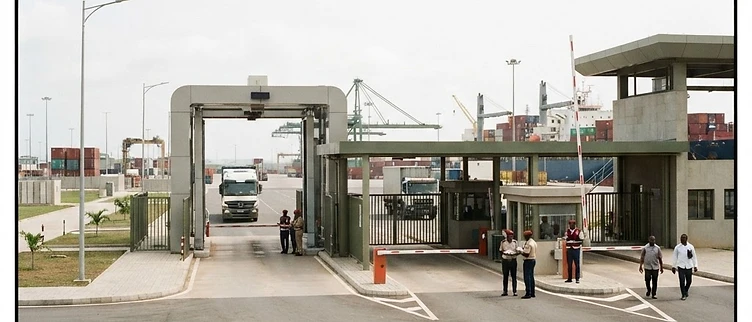
Illustration. AI-generated editorial image, not a documentary photograph.
The recent push for centralized security governance in the port city of San-Pédro is not a neutral administrative reform but a calculated effort to strip the Bas-Sassandra district of its economic leverage. By prioritizing state-led security oversight over local municipal control, the central government is effectively neutralizing regional political actors ahead of the next electoral cycle. This shift threatens to turn a vital economic hub into a mere extension of Abidjan's political machinery, undermining the autonomy of local stakeholders.
Key judgement
The centralization of security governance in San-Pédro is a deliberate strategy to neutralize regional political autonomy ahead of the next electoral cycle. This move will likely lead to increased political friction between the central government and local stakeholders as the latter attempt to reclaim control over their economic assets.
The analysis rests on the observable trend of security-led governance in the region, which is supported by recent reports on port safety workshops and national development strategies.
What to watch
- Appointment of state-aligned security officials to key port management roles by December 2026.
- Emergence of a unified local political coalition in Bas-Sassandra by January 2027.
- Public statements from local municipal leaders regarding the impact of the new security framework on port operations by February 2027.
Implications for decision-makers
- Local political actors must pivot from traditional campaigning to building resilient, community-rooted coalitions that can withstand state-led containment.
- Policymakers should recognize that the current centralization strategy risks long-term regional instability and should consider more inclusive governance models.
- Investors and development organizations should conduct deeper political risk assessments that account for the shifting power dynamics between the center and the regions.
The Illusion of Local Security Governance
The recent emphasis on security governance in San-Pédro, the capital of the Bas-Sassandra district, is being presented by the central government as a necessary modernization of port safety and civil-military coordination. However, beneath the rhetoric of stability lies a more aggressive political reality: the systematic centralization of authority over one of Côte d'Ivoire's most critical economic engines. Since the February 2026 workshops that brought together security officials and port authorities, the narrative has shifted from local community engagement to the imposition of a top-down security framework that bypasses municipal oversight.
This development is not merely about port safety; it is a strategic maneuver to consolidate control over the regional economic apparatus. By framing the port’s operations through the lens of national security, the central government effectively removes local political leaders from the decision-making loop. This is a classic exercise in political containment, where the state uses the pretext of 'governance' to ensure that the economic output of the southwest remains firmly under the thumb of Abidjan-based elites.
For the residents of San-Pédro, this means that the decisions affecting their primary source of employment and regional development are increasingly made in boardrooms far removed from the realities of the Krou, Bakwé, and Wané communities. The local government, which should be the primary arbiter of regional development, is being relegated to a secondary role, forced to comply with security mandates that prioritize national political stability over local economic prosperity. This is a direct challenge to the democratic principle of local governance, and it signals a broader trend of state-led enclosure of regional power.
The Strategic Enclosure of Bas-Sassandra
San-Pédro’s status as the fifth most populous city in Côte d'Ivoire makes it a vital node in the national political landscape. Its economic significance, driven by the port and the surrounding agricultural hinterland, provides the region with a degree of leverage that the central government clearly finds uncomfortable. The recent push to integrate security governance into the port’s daily operations is a strategic response to this potential for regional autonomy. By controlling the security architecture, the state gains the ability to monitor, influence, and, if necessary, suppress local political dissent.
This strategy is particularly effective because it is cloaked in the language of professionalization and international standards. When the government speaks of 'strengthening local security governance,' it is actually talking about the deployment of state-aligned security personnel who report directly to national authorities rather than local councils. This creates a parallel power structure that renders the local administration toothless. The result is a form of political capture that is difficult to challenge because it is presented as a technical necessity rather than a political choice.
Furthermore, the timing of these initiatives is not coincidental. As the country moves toward the next electoral cycle, the central government is clearly focused on neutralizing potential power bases that could challenge its hegemony. By securing the port, the state ensures that it has a firm grip on the region's economic lifeline, thereby limiting the ability of local political actors to mobilize resources or build independent coalitions. This is a masterclass in electoral strategy, where the state uses administrative reform to achieve political dominance.
The Governance Gap in Public Service Delivery
While the government touts its security and digital transformation initiatives, the reality on the ground in San-Pédro tells a different story. Despite the rhetoric of modernization, the actual delivery of public services remains inconsistent and often disconnected from the needs of the local population. The focus on high-level security and digital infrastructure often comes at the expense of basic services like healthcare, education, and local infrastructure, which are the true indicators of effective governance.
For instance, the new regional hospital center, while a significant investment, is often hampered by the same centralized management issues that plague other sectors. When decisions about staffing, procurement, and resource allocation are made in Abidjan, the local hospital is unable to respond effectively to the specific health needs of the San-Pédro community. This creates a persistent gap between the government's promises and the actual experience of the citizens, a gap that is increasingly being filled by frustration and political apathy.
This governance failure is not an accident; it is a structural feature of the current system. By centralizing control, the government ensures that it can claim credit for major projects while shifting the blame for service delivery failures to local officials who have no real power to address them. This is a cynical game of political accountability, where the state reaps the benefits of control while avoiding the responsibilities of governance. For the people of San-Pédro, this means that their daily struggles are secondary to the political calculations of the ruling elite.
Rebutting the Technocratic Defense
Proponents of the current centralization strategy argue that it is necessary to ensure efficiency, transparency, and national security in an increasingly complex global environment. They contend that local governments lack the capacity and the resources to manage critical infrastructure like the port of San-Pédro, and that a unified, state-led approach is the only way to prevent corruption and ensure that national development goals are met. This argument, while superficially appealing, fails to account for the democratic cost of such an approach.
Efficiency is not a substitute for accountability. When the state centralizes control, it removes the feedback loops that are essential for effective governance. Local leaders, who are directly accountable to their constituents, are the best positioned to understand the needs and challenges of their communities. By bypassing them, the state creates a system that is unresponsive to the very people it is supposed to serve. The claim that local governments lack capacity is often a self-fulfilling prophecy, as the state systematically strips them of the resources and authority they need to build that capacity.
Moreover, the argument for 'transparency' is often used to mask the lack of it. Centralized systems are notoriously opaque, with decisions made behind closed doors in Abidjan, far from the scrutiny of the public or the local press. True transparency requires local oversight, community participation, and the ability of citizens to hold their leaders accountable. By centralizing power, the government is not promoting transparency; it is creating a system of patronage where loyalty to the center is rewarded and dissent is punished. This is not a path to development; it is a path to political stagnation.
The Role of Apex Africa in Navigating Political Dynamics
For political actors and organizations operating in this environment, the challenge is to navigate the tension between centralized state power and the need for local autonomy. This is where Apex Africa’s expertise in Political Intelligence and Election Strategy becomes critical. We help our clients understand the structural dynamics of power in Côte d'Ivoire, enabling them to identify the levers of influence that are not immediately apparent. By mapping the relationships between national institutions and local power structures, we provide the intelligence needed to build effective, resilient campaigns.
Our approach is rooted in the understanding that political success in Côte d'Ivoire requires more than just rhetoric; it requires a deep, evidence-based analysis of the institutional and social landscape. Whether it is navigating the complexities of electoral reform or building grassroots support in the face of state-led containment, our services provide the strategic edge necessary to compete. We help our clients move beyond the surface-level narratives and engage with the underlying power dynamics that actually determine outcomes.
In San-Pédro, for example, an effective strategy would involve building coalitions that bridge the gap between local community interests and the broader national political discourse. This requires a sophisticated understanding of the local political economy and the ability to articulate a vision that resonates with the people while navigating the constraints imposed by the center. Apex Africa provides the research, analytics, and strategic guidance to make this possible, ensuring that our clients are not just participants in the political process, but active shapers of their own future.
Future Scenarios and Indicators to Watch
As we look toward the next electoral cycle, three scenarios for the evolution of the situation in San-Pédro emerge. In the first scenario, the central government continues its policy of aggressive centralization, leading to a further erosion of local autonomy and a potential increase in social unrest as the gap between the state and the community widens. The indicator to watch here is the appointment of state-aligned officials to key local positions, which would signal a total capture of the regional administration.
In the second scenario, local political actors successfully push back against the centralization, forcing the government to negotiate a more balanced power-sharing arrangement. This would be marked by the creation of genuine consultative bodies that give local leaders a real say in port management and regional development. The indicator to watch is the emergence of a unified local political front that can effectively challenge the state’s narrative and demand greater accountability.
In the third scenario, the government attempts to co-opt local leaders by offering them a share of the spoils, effectively neutralizing the opposition through patronage. This would lead to a superficial stability, but would ultimately fail to address the underlying governance issues. The indicator to watch is the sudden silence of local political figures who were previously critical of the central government, suggesting that they have been brought into the fold. Regardless of the scenario, the situation in San-Pédro will remain a critical litmus test for the future of local governance in Côte d'Ivoire.
Strategic Implications for Stakeholders
For policymakers and public officials, the implication is clear: the current path of centralization is unsustainable and risks alienating the very communities that are essential for national stability. The recommendation is to shift toward a model of genuine decentralization that empowers local governments and fosters community participation. This requires a commitment to transparency, the devolution of real decision-making power, and a focus on service delivery that is responsive to local needs.
For political strategists and campaign leadership, the lesson is that the old ways of campaigning are no longer sufficient. The state’s ability to control the narrative and the resources means that campaigns must be more agile, more data-driven, and more deeply rooted in the community. The recommendation is to invest in deep-dive research and analytics to understand the specific grievances and aspirations of the electorate, and to build campaigns that offer concrete, actionable solutions to the problems they face.
For NGOs and development organizations, the implication is that their work must be more politically aware. It is no longer enough to focus on technical assistance; they must also engage with the political dynamics that shape the environment in which they operate. The recommendation is to support local civil society organizations in their efforts to demand accountability and to advocate for policies that promote local autonomy and democratic participation. By doing so, they can help create a more resilient and responsive political system.