Article · Liberia
Can Montserrado County’s Legislative Vacuum Survive the 2029 Electoral Reckoning?
Why the ongoing representation crisis in District #10 is not a legal anomaly, but a calculated structural failure that threatens the legitimacy of the entire Liberian political class.
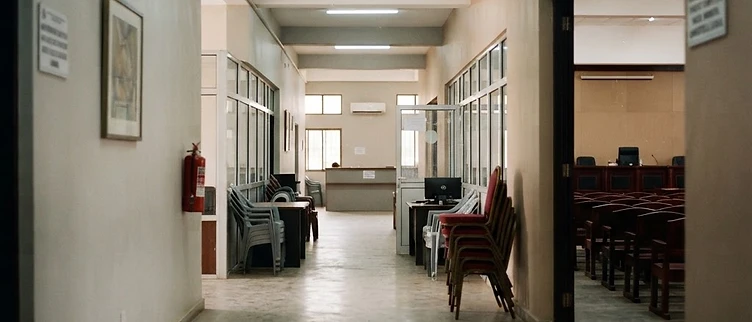
Illustration. AI-generated editorial image, not a documentary photograph.
The prolonged representation crisis in Montserrado County District #10 is a symptom of a deeper, systemic rot in Liberian legislative politics that prioritizes institutional preservation over constituent rights. This article argues that the failure to resolve this vacancy is a strategic choice by the political elite to insulate the 55th Legislature from accountability, a move that will inevitably backfire in the 2029 election cycle.
The Myth of Institutional Integrity
The ongoing representation crisis in Montserrado County District #10 is frequently framed by the political establishment as a complex legal dispute, a procedural hurdle that requires patience and judicial deference. This is a convenient fiction. In reality, the vacuum left by the expulsion of Yekeh Y. Kolubah is a deliberate structural maneuver designed to neutralize one of the most vocal critics of the current administration. By keeping the district in a state of legislative limbo, the 55th Legislature is not merely upholding 'institutional respect'; it is actively disenfranchising a critical urban constituency to ensure that the legislative floor remains a theater of consensus rather than a site of genuine oversight.
Conventional wisdom suggests that the House of Representatives is simply protecting its authority against disruptive elements. However, this reading ignores the reality of power dynamics in Monrovia. When a district is left without a voice, the 'institutional authority' being protected is not the democratic mandate of the people, but the comfort of the incumbent coalition. The silence in District #10 is a feature, not a bug, of a system that views dissent as a threat to governance rather than a necessary component of it.
The 2029 Calculus: Why the Ruling Party is Playing a Dangerous Game
The Unity Party (UP) has recently signaled its confidence, declaring its readiness to defeat opposition forces in 2029. This bravado, however, masks a fragile reality. By allowing the District #10 crisis to fester, the ruling party is inadvertently creating a martyr-narrative that will be weaponized by the opposition. The 'Boakai 2029 Reelection Movement' assumes that the status quo is sustainable, but they are failing to account for the volatility of urban voters who feel abandoned by the national legislature.
At Apex Africa Strategy & Intelligence, we often advise our clients that political intelligence is not just about tracking the opposition; it is about understanding the structural vulnerabilities of the incumbent. The current administration’s reliance on the 'ARREST' agenda—Agriculture, Roads, Rule of Law, Education, Sanitation, and Tourism—is a sound policy framework on paper, but it is being undermined by the perception of legislative arrogance. When constituents see their representative seat treated as a bargaining chip, the entire policy agenda loses its moral authority.
Rebutting the 'Stability' Argument
Critics of this analysis will argue that the Legislature must prioritize stability and that the expulsion of disruptive members is necessary to prevent the 'parliamentary theater' that has plagued other regional legislatures. They contend that the court system must be allowed to run its course without political interference. This argument fails because it ignores the timeline of political reality. In Liberia, 'due process' is frequently used as a synonym for 'indefinite delay.'
Stability is not the absence of conflict; it is the presence of a functioning mechanism to resolve it. By stalling the resolution of the District #10 vacancy, the Legislature is not creating stability; it is creating a pressure cooker. The longer the district remains unrepresented, the more the legitimacy of the 55th Legislature is eroded. A legislature that cannot manage its own membership is a legislature that cannot manage the nation’s fiscal or security challenges, as evidenced by the recurring need for special sessions to address budget shortfalls and border tensions.
The Role of Data in Navigating the Vacuum
For political organizations operating in this environment, the uncertainty in District #10 is a data-gathering opportunity. Our work in Political Research & Analytics shows that when a constituency is denied representation, the traditional party loyalties begin to fracture. Voters do not just sit idle; they shift their allegiance to whoever promises to break the deadlock.
Candidates who ignore the granular data of these 'forgotten' districts are destined to fail. The 2029 election will not be won by national rhetoric alone; it will be won by those who can effectively mobilize the frustration of districts like #10. If the opposition can successfully frame the vacancy as a symbol of the ruling party’s contempt for the electorate, the political cost will be far higher than any short-term legislative victory the UP might currently enjoy.
A Call for Strategic Realism
Liberia’s political class must recognize that the era of unchallenged institutional dominance is over. The 2% election threshold, which the NPP and other parties support to 'strengthen' the process, will only serve to consolidate the anger of smaller, disenfranchised groups if the major parties continue to treat legislative seats as personal fiefdoms.
True political intelligence requires the courage to look past the surface-level legal arguments and see the structural rot underneath. Whether you are an incumbent looking to secure a second term or an opposition leader attempting to build a viable coalition, you must understand that the District #10 crisis is a microcosm of the national struggle for accountability.
If you are a political leader or organization looking to navigate these complex dynamics, you need more than just campaign slogans; you need a rigorous, data-driven strategy that anticipates the next shift in the political landscape. We invite you to request a confidential consultation at https://apexafricastrategy.com to ensure your campaign is prepared for the realities of the 2029 cycle.