Article · Republic of the Congo
Brazzaville Municipal Councils Are Not Governing Bodies But Patronage Distribution Hubs
The illusion of local democracy in the Republic of the Congo masks a rigid, top-down system of political extraction.
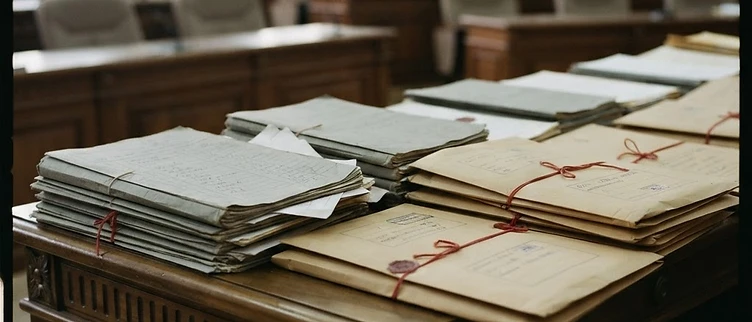
Illustration. AI-generated editorial image, not a documentary photograph.
The conventional narrative of local government in the Republic of the Congo suggests a path toward decentralization and grassroots representation. In reality, municipal councils in Brazzaville function exclusively as patronage distribution hubs for the ruling Congolese Labour Party (PCT). This article argues that until these structures are decoupled from the central executive's financial control, they will remain political zombies rather than engines of local development.
The Myth of Local Autonomy
The prevailing wisdom among international observers and civil society groups in the Republic of the Congo is that local government reform represents a necessary, if slow, step toward democratic consolidation. This perspective is fundamentally flawed. In Brazzaville, the municipal council is not a site of local governance or civic deliberation; it is a highly efficient, top-down mechanism for the distribution of state patronage. By framing these councils as 'local government,' we grant them a legitimacy they do not possess and ignore the reality that they are merely administrative extensions of the Congolese Labour Party (PCT) central committee.
The Architecture of Patronage
Under the 2015 Constitution, the state established various advisory councils for women, youth, and traditional elders. While these are often touted as evidence of inclusive governance, they function as co-optation tools. In the Brazzaville Municipal Council, the primary objective is not the delivery of public services but the maintenance of the PCT’s clientelist networks. When we analyze the electoral outcomes for these councils, we see a system designed to ensure that only those who demonstrate absolute loyalty to the executive branch can access the resources necessary to maintain their local influence. This is not democracy; it is a managed hierarchy.
The Failure of the Opposition Strategy
Opposition parties frequently fall into the trap of participating in these local elections under the assumption that they can 'capture' the council from within. This strategy is a structural dead end. Because the financial and security apparatus of the state is entirely controlled by the central government, any opposition councillor who manages to win a seat is immediately faced with a choice: integrate into the PCT’s patronage network or be rendered irrelevant. The 2023 senatorial elections, where the PCT and its allies secured 64 out of 72 seats, demonstrate that the system is designed to be impenetrable to genuine political competition.
Rebutting the Decentralization Argument
Critics of this analysis often argue that local councils provide a vital, if limited, space for 'everyday resistance' and that even a small presence in these bodies is better than total exclusion. This argument fails because it ignores the opportunity cost of legitimizing a fraudulent system. By participating in these councils, opposition figures provide the veneer of democratic process that the regime uses to secure international recognition. The 'slow resistance' observed by some scholars is not a precursor to democratic change; it is a survival mechanism that ultimately reinforces the status quo by keeping the population focused on local, manageable grievances rather than national structural reform.
The Role of Apex Africa Strategy & Intelligence
At Apex Africa, we recognize that political intelligence is not about observing the surface-level rhetoric of elections, but about mapping the actual flow of power and resources. Our Political Intelligence service helps leaders understand that in a system like the Republic of the Congo, the 'grassroots' is not a place of spontaneous mobilization but a terrain of state-managed control. We assist our clients in identifying the specific nodes of patronage that sustain the PCT, allowing them to bypass the futile theater of local council politics and focus on building genuine, independent power bases that do not rely on the regime’s permission to exist.
Future Scenarios and Indicators
Looking ahead, we anticipate three potential trajectories for local governance in the Republic of the Congo. First, the regime may further centralize control, effectively dissolving the remaining pretense of municipal autonomy. Second, we may see a 'managed opening' where the PCT allows more independent candidates to win minor seats to appease international donors. Third, a total collapse of the patronage system due to economic volatility could lead to a vacuum at the local level. Readers should watch for changes in the budgetary allocations to municipal councils; a decrease in discretionary spending at the local level is a clear indicator that the central government is tightening its grip on the patronage pipeline.
A Call for Strategic Realism
It is time to stop treating the Brazzaville Municipal Council as a democratic institution. It is a tool of the state, and it will continue to function as such until the underlying power dynamics are fundamentally altered. For those serious about political change, the path forward requires a departure from the conventional electoral playbook. We invite you to request a confidential consultation at https://apexafricastrategy.com to discuss how your organization can navigate these complex realities and build a strategy that actually wins.